
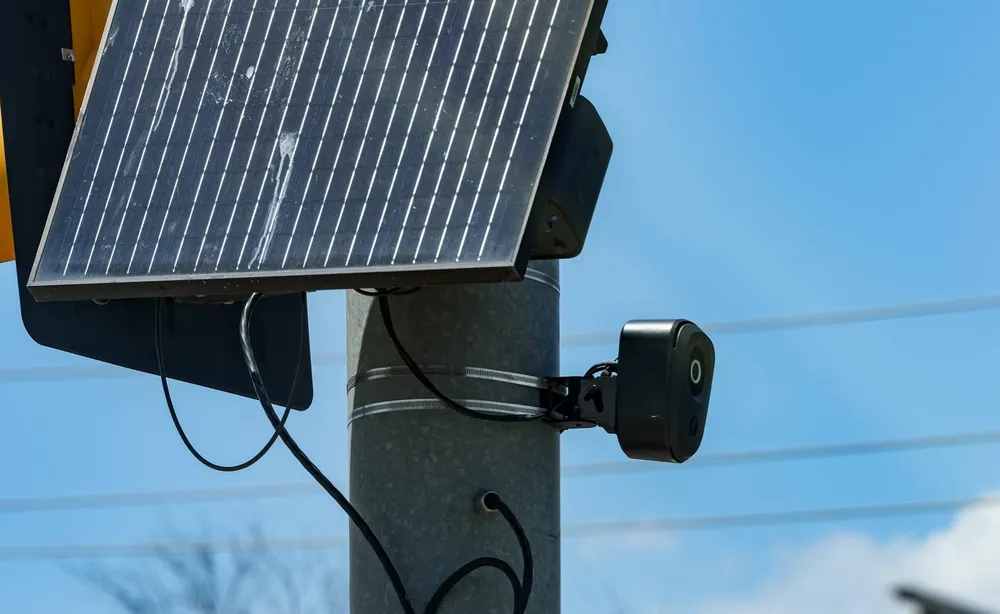
Lawton City Council held their regular meeting Tuesday night, with the first main topic of discussion being one that many across the nation have mixed opinions about, which are the use of Automatic License Plate Readers (ALPRs). Specifically, the first one that comes to mind because of its broad use throughout municipalities are Flock cameras.
You can read a previous story about Lawton's use of Flock cameras here.
The purpose of the discussion was to receive a report from the Lawton Police Department (LPD) and the cameras’ use and auditing process. Additionally, the council would consider approving a new city use policy in addition to the departmental policy.
The presentation was given by Assistant Chief of Police Alvin Winham. To start off, he talked about some of the successes of the system.
“This system works so good, that when we had our first session within about 15 minutes of implementing this we had our first stolen vehicle recovery,” Winham said.
Lawton started implementing FLOCK cameras back in 2024, and currently has 28 cameras installed. Winham said this tool is effective because 75% of crimes involve a motor vehicle in some capacity. In addition, Winham attempted to address some of the “myths” surrounding the use of FLOCK. He clarified that the cameras only detect the rear portion of a vehicle, creating a description of the car around that, and does not detect things like the gender or race of the driver or passengers. Winham also said that the information gathered is not sold to third parties and that LPD has their own cloud they use to send/store information.
After clarifying what ALPRs actually captured, he explained that there are two ways that officers use the cameras. They either receive real-time alerts or search the system for an investigation. Winham went on to say that there are multiple layers of security for the camera's data collection that range from authorized personnel to search audits. Lawton’s data retention period is for 30 days, according to Winham.
Following the presentation, one question that was asked by the council was whether the information collected by the cameras was admissible in court. Winham responded by saying “no”.
“I’m totally and completely in favor, with some guardrails of course, which you’ve got in place,” Mayor Pro Tem Randy Warren stated before making a motion to approve.
Warren also said that he would be providing information to the legal department. Before a vote, Councilman Epps chimed in and asked Winham to describe the measures in place to prevent system abuse. Winham said that there are two officers in Internal Affairs that check the searches and algorithms that LPD creates.
Epps also wanted to clarify that the Flock cameras do not record audio, which Winham confirmed is true.
City Manager John Ratliff followed and said that implementing a policy around the use of Flock cameras is very “forward-leaning”, adding that most other municipalities do not have one. Oklahoma City is another municipality that has guidelines surrounding their Flock camera use. The motion to approve the policy passed 8-0.
Journalism like this is only made possible through community support. To learn more about helping Texoma's first nonprofit newsroom, click the button below.
Looking more in-depth into Lawton’s new policy, it outlines the use of the cameras by LPD officers, but makes an interesting point that wasn’t mentioned during the council meeting. Particularly in the policy’s Operations section, it states, “consideration should be given to using ALPR-equipped vehicles to canvas areas.”
Additionally, the policy states that reasonable suspicion or probable cause are not needed for an officer to use the system. You can read the policy in its entirety at the bottom of this article.
Expanding out to a state level, at the beginning of October, Sen. Mary Boren (D-Norman) held an interim study over the use of Flock cameras specifically and their rapid expansion across Oklahoma. According to the release over the study, the use of these cameras has “intensified debate at the Capitol over the Fourth Amendment, law enforcement, and mass surveillance.”
“People should feel secured by their government, not stalked by it,” Boren stated.
Dr. Michael Wilds is an attorney and professor at Northeastern State University who has stated that courts have ruled that law enforcement agencies exceed their legal authority and violate state law when they use ALPRs for more than determining insurance coverage.
The issue of ALPR usage is a topic that has crossed both sides of the isle as House Rep. Tom Gann (R-Inola) has held multiple interim studies of his own in regards to Flock cameras.
“Government should enforce the insurance laws and investigative crime through methods that are authorized by law. If you take the face value of the statute, they are unlawful to be used in the way they are using,” Gann said.
Chad Marlow, senior policy counsel for privacy and technology at the American Civil Liberties Union, confirmed reports of mistakes and high error rates with the use of these cameras involved in active criminal investigations. During the study, Marlow stated that although safeguards could reduce some of the risks involved, they cannot make the technology completely safe because of easily identifiable loopholes. He went on to say the strongest safeguard is banning their usage.
“This discussion needs to continue so that we clarify the permitted use of ALPRs under Oklahoma Law as well as constitutional law,” Boren finished.
One of the largest reasons the state is divided on the use of ALPRs, as described during the interim study, is that the current statute governing their use (47-7-606.1) is written around Oklahoma’s Insurance Compulsory Law. However, Section F of the statute ends by stating “or as otherwise permitted by law,” which is important to note in this situation. That portion of the statute is mainly what’s being used to justify the cameras’ current use.
While Lawton officials work to implement guardrails and outlines for this technology, many still have concerns over the use of Flock cameras. Whatever additional guidelines are implemented by the state, if any, will be determined by the upcoming legislative session.












Comments