
One man’s dismissed speeding ticket and the city’s inability to verify a highway's speed limit have led to questions of whether the City of Wichita Falls has been improperly enforcing various state highway speed limits throughout the city.
On April 29, 2026, Scott Phillips was issued a speeding citation on the 1000 block of Central Freeway, heading back into town from Vernon on 287. When going to municipal court to pay the fine, Phillips stated he was asked whether he wanted to plead “no contest” or “guilty”. However, Phillips had doubts about whether the officer who issued him the ticket was actually able to precisely pin down his vehicle's speed. He said he wanted to keep his record clean since he had never received a speeding ticket in his life.
“I decided to challenge it,” Phillips said.
Despite the clerk saying no one really pleaded “not guilty”, Phillips began preparing his defense. His main argument was whether the officer could’ve accurately clocked his vehicle's speed. Using camera footage showing the other cars around him and the distance the officer would have had to notice him, he thought his case looked solid.
Phillips went on to say that his friends would make fun of him for challenging the ticket instead of just paying, but as time went on, he became more confident in his findings. His last argument of defense would be to question whether the 60-mile-an-hour speed limit was outdated and if it was worth updating. So, he filed an open records request, which included the most recent speed study that was done on that portion of the highway.
“It came back with a speed study from 2003 and a letter,” Phillips said. “But nothing else.”
According to documents, the letter from the Texas Department of Transportation (TxDOT), dated March 9, 2004, stated they had completed a speed study and that new signs were being installed on the elevated freeway to reflect driving at 60 miles per hour. Furthermore, it stated that the speed limit had previously been 50 miles per hour since construction and requested the City of Wichita Falls pass an accompanying ordinance and send it.
After further digging and outreach to city officials, Phillips was unable to find any documents that, to him, established the legal backing of the speed limit. Phillips took this information to his court hearing, where his ticket was ultimately dismissed. Specifically, Phillips’ ticket was dismissed because the city was unable to verify the speed limit.
While Phillips’ decision to challenge the ticket ended in a dismissal, it raised a very interesting question: Has Wichita Falls been improperly enforcing state roadways throughout the city?
According to information on the Texas Department of Transportation (TxDOT), as far as state-owned roadways within city limits go, there are two ways the speed limit can be enforceable. That is by a minute order (MO) from the Texas Transportation Commission, or by a city ordinance (CO).
In an effort to make the city aware of the situation, Phillips wrote the City of Wichita Falls a letter. He addressed the City Manager, the Mayor and Council, and the City Attorney’s office in three separate envelopes. In the letter, Phillips requested a review of some of the posted speed limit signs, and if it was found they weren’t properly authorized, then the city should take corrective action.
Over two months later, Phillips received a response from City Manager James McKechnie. McKechnie’s response stated that speed limits on state roadways are determined by minute orders from the Texas Transportation Commission, citing state Chapter 545.
However, a TxDOT 2015 document titled “Procedures for Establishing Speed Zones” states, “Except in very unusual circumstances, the zoning on state highway routes within cities should only be set by city ordinances based upon the recommendations of TxDOT”. Additionally, looking at Section 545.356, the code says that a municipality has the authority to alter the state defaults by ordinance based on the results of a speed study.
To get more information, Dark Roast Report reached out to Adele Lewis-Brauer, the Public Information Officer for TxDOT’s Wichita Falls District, where we learned that a lot more roadways are owned by the state than many might think. Roads like Seymour Highway and Southwest Parkway used to be the main roads running through the city, but as the city developed, they’ve become overshadowed by the overpass and Kell but still maintain their state status.
Lewis-Brauer further explained that TxDOT isn’t a law enforcement agency and therefore isn’t responsible for enforcing speed limits.
“The city has to pass an ordinance for it to be enforceable by giving people tickets,” Lewis-Brauer said.
What was just as interesting as the number of roads TxDOT oversaw was the amount that the City of Wichita Falls didn’t have accompanying ordinances for. According to information received from an open records request, the Wichita Falls District of TxDOT has a spreadsheet that tracks the minute order and/or city ordinance status of its maintained roads. According to that sheet, 16 out of 34 didn’t have a minute order or city ordinance to back the speed limit set by TxDOT, 13 roadways were only partially covered by an MO or CO, and only 5 were fully covered by an accompanying MO or CO.
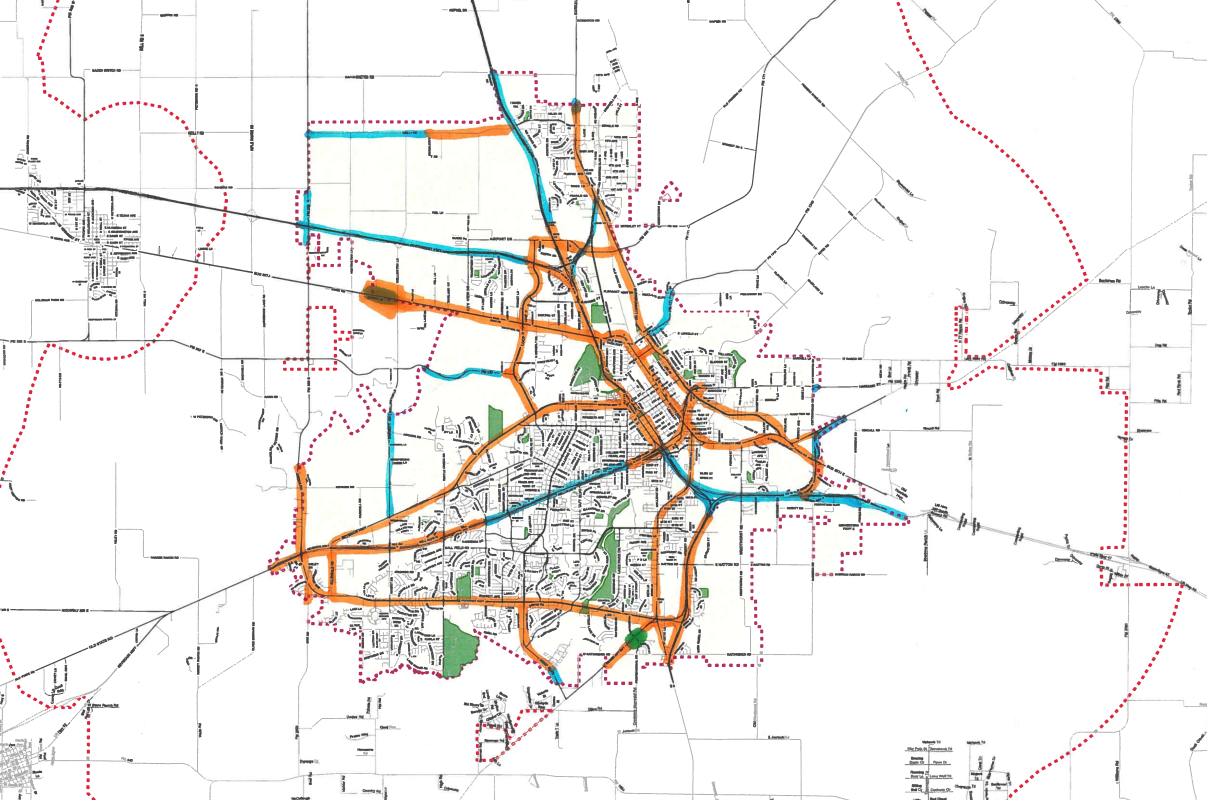
In the interview with Lewis-Brauer, she said that she wasn’t surprised at the amount of missing information because of the way records were retained back in the day. She said that a majority of records were kept in hard copies. However, she wasn’t able to clarify whether that meant the records were missing or they never existed, adding that the city would be the main custodian of that information since they’re city ordinances.
In an attempt to verify the spreadsheet received from TxDOT, Dark Roast Report sent a public information request to the City of Wichita Falls hoping to fill some of the gaps. We asked for the most up-to-date city ordinance that acknowledged the current prima facie speed limit sign for all 16 roadway sections.
After about a week of waiting, we received a response: “No records exist”.
Dark Roast Report also reached out to the city regarding this situation. After a few days, we received the following statement:
“The City of Wichita Falls relies on the Texas Department of Transportation to maintain state highways, speed limits, maintenance, and posted signs. Your request falls within the scope of state maintenance and regulation; therefore, you are urged to contact the state for clarification on your question.”
We followed up to clarify that this story deals with the city’s enforcement of these speed signs as we’ve already spoken with TxDOT who said it was the city’s responsibility. The city advised us to use the same statement.
Journalism like this is only made possible through community support. If you believe in Dark Roast Report’s mission, consider becoming a member.
In an effort to further clarify the information, Dark Roast Report reached out to the City of Iowa Park to see if they passed ordinances for state roadways and spoke with City Manager Jerry Flemming. Flemming stated that any speed limit sign that was changed from the state default needed to have an ordinance accompanying it. After searching, we were able to find a table of altered prima facie speed limits in the City of Wichita Falls’ code of ordinances for city streets, as stated in the city’s response letter.
For those who have received a speeding ticket along one of these roads for not following the posted sign and either plead “guilty” or “no-contest”, there is not much that can be done.
Phillips argued that if there is no reliable backing for some state highway speed limits, it would be unethical for the city to knowingly continue handing out speeding tickets. He does clarify and says that he doesn’t believe the city is doing anything malicious, but that it was an oversight from years ago that hasn’t been corrected. Based on court records, the city is still enforcing the speed limits and handing out citations.
Overall, Phillips is using this situation as an example to show the importance of asking questions. He said that the average person is not going to argue about getting handed a speeding ticket and will most likely go and pay it off.
“I think we should ask questions,” Phillips said. “I asked a simple question that apparently no one asked in 18 years.”
According to the TxDOT spreadsheet, a majority of the roads will require speed studies. In addition, based on what is written in TxDOT’s guidelines, the City of Wichita Falls will need to pass ordinances to accompany the state department’s set speed limits if they do not go through Traffic Commission minute orders. The documentation gap has left questions on whether the speed limits posted that alter the state default are properly established and what steps, if any, the city will need to take in order to remedy the situation.













Comments